

Bridge 2026 Explores How Language and Culture Can Shape Global Talent Development in New York
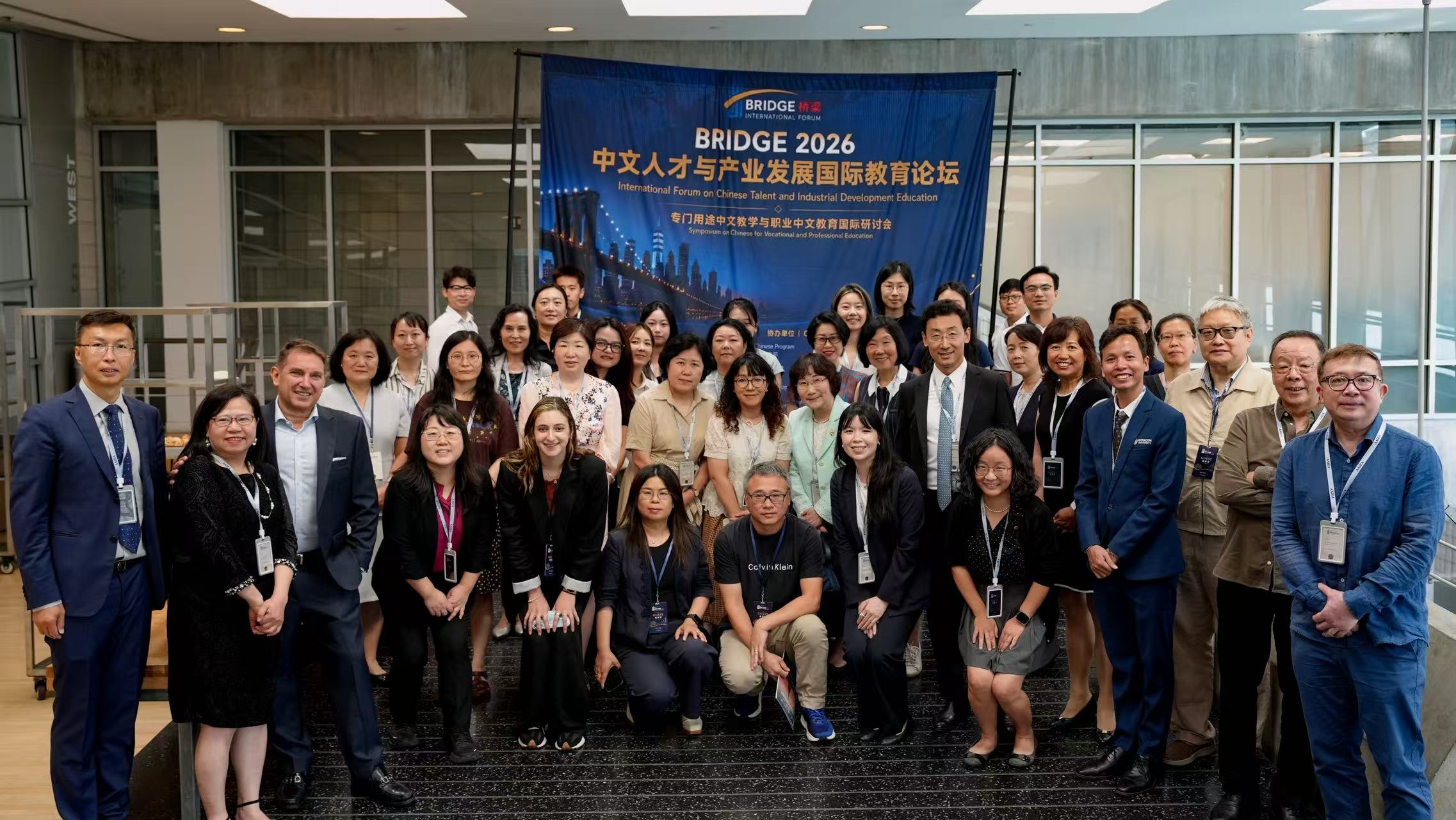
Bridge 2026 Group Photo at Columbia University
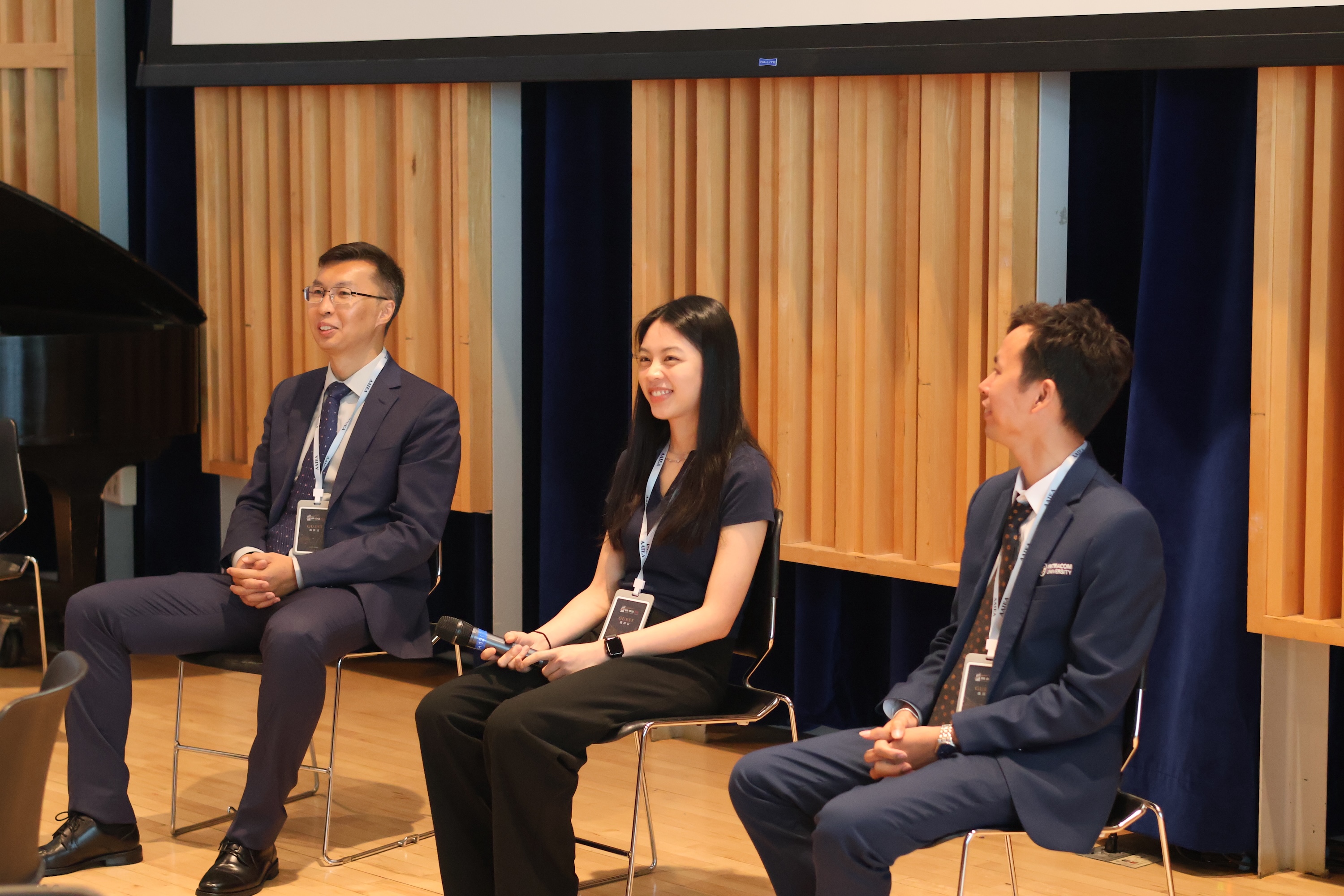
(Left) Yufeng Gao, Executive Director of the American Association for International Education Advancement (AAIEA), at the Bridge 2026 forum.
Over 100 global educators and industry leaders gathered at Columbia University to explore language education, AI innovation, and talent development.
NEW YORK, NY, UNITED STATES, August 21, 2026 /EINPresswire.com/ -- More than 100 educators, scholars and industry representatives gathered at Columbia University on Aug. 13 and 14 for Bridge 2026, a two-day international education forum exploring how language and culture can connect classrooms with professional development, cross-cultural understanding and new pathways for global talent.Organized by the American Association for International Education Advancement, the forum brought together participants from the United States, China, Japan, Australia, Vietnam and elsewhere. Participants included scholars and educators as well as representatives from Duolingo, Ruan Yun Technology, Chaoxing Group, Xinyan Group, and other companies and educational organizations. Together, they explored new approaches to Chinese language education, professional development, industry needs, and global talent development in the age of AI.
Running through the two-day forum was a broader idea: language education can serve not only as a way to communicate, but also as a bridge between cultures, fields of knowledge and professional communities.
In his opening remarks, Zhongqi Shi, chair of the Bridge 2026 Organizing Committee, said many of the questions facing education today may find their answers “at the intersections of different fields.” His remarks pointed to a question that resurfaced throughout the forum: how can what students learn in a language classroom travel with them into the wider world — into another culture, another academic field or eventually a professional setting?
Through keynote speeches, roundtable discussions, workshops and breakout sessions, participants examined Chinese for specific and professional purposes, language education in the age of artificial intelligence, university–industry collaboration and new approaches to talent development.
Discussions of AI placed technology within a broader conversation about the changing purpose of language education. Chunming Shan, Professor of Chinese Studies at Monash University, said, “The question is not whether AI can translate, nor whether AI can translate better than I can. The real educational question is: What should humans learn when AI can already translate?”
The discussion also highlighted the continuing importance of language and cultural understanding in international education. Priscilla Yuen, Assistant Dean at Columbia University’s School of International and Public Affairs, said trust cannot be built without understanding language and culture. She emphasized the importance of creating opportunities for students to engage with different cultures and viewpoints, become better informed and recognize that people may have different perspectives.
Those themes became especially visible during the Global Talent Development Ecosystem Roundtable on Aug. 14. Representatives from universities in the United States and China joined educators, vocational institutions, business representatives and education technology professionals to discuss international programs, student mobility, practical learning and opportunities for longer-term collaboration.
Participants shared examples of programs designed to bring students into new academic, cultural and professional environments. Representatives from Zhejiang Wanli University and Dalian Minzu University discussed their experiences in international collaborative education, while representatives from Shandong City Service Vocational College, Qingdao Vocational and Technical College of Hotel Management, and Hunan Railway Professional Technology College introduced their institutions and expressed interest in welcoming U.S. university students for study and exchange. Chaoxing Group, representing the educational technology sector, also discussed how digital platforms can support educational cooperation and talent development between China and the United States.
The range of participants reflected the forum’s effort to bring communities that do not always meet in the same room into a shared conversation. University faculty and administrators sat alongside technology professionals, business representatives and program leaders, allowing discussions to move between language teaching, cultural exchange, education and the changing world of work.
Bridge 2026 also received strong support from organizations including the China General Chamber of Commerce Foundation, the International Society for Chinese Language Teaching, and Beijing Polytechnic College.
For organizers, the connections created through those conversations were as important as the individual sessions. Yufeng Gao, executive director of AAIEA, said the organization plans to build on relationships formed during the forum through research collaboration, educational programs, student exchanges, experiential learning opportunities and longer-term institutional partnerships.
The conversations also reflected an expanding understanding of what language education can offer students. Proficiency remains an essential goal, but learning another language can also provide access to different cultural contexts, communities and ways of thinking. When combined with academic and professional experiences, those connections can help students move more confidently across disciplines and environments that increasingly extend beyond a single classroom, institution or country.
In that sense, Bridge 2026 placed language at the beginning of a larger journey. What starts with learning how to understand and communicate can develop into cultural familiarity, academic exchange, professional experience and relationships that continue long after a course or conference has ended.
In his remarks, Shi drew on the image at the center of the forum’s name.
“The value of a bridge lies not in the bridge itself, but in what it connects — and what those connections make possible.”
Sherry Fan
ETB
email us here
Legal Disclaimer:
EIN Presswire provides this news content "as is" without warranty of any kind. We do not accept any responsibility or liability for the accuracy, content, images, videos, licenses, completeness, legality, or reliability of the information contained in this article. If you have any complaints or copyright issues related to this article, kindly contact the author above.
